Ad Tech|Index 01
Brands Lag Consumer AI Expectations
New research indicates a growing consumer appetite for AI-driven interactions, yet many brands remain unprepared to deliver them effectively.
- Via
- ADVERTISE TOKYO Editors
- Dateline
- Tokyo, June 12, 2026
- Date
- June 12, 2026
- Time
- 5 min read
Source
MarTech.org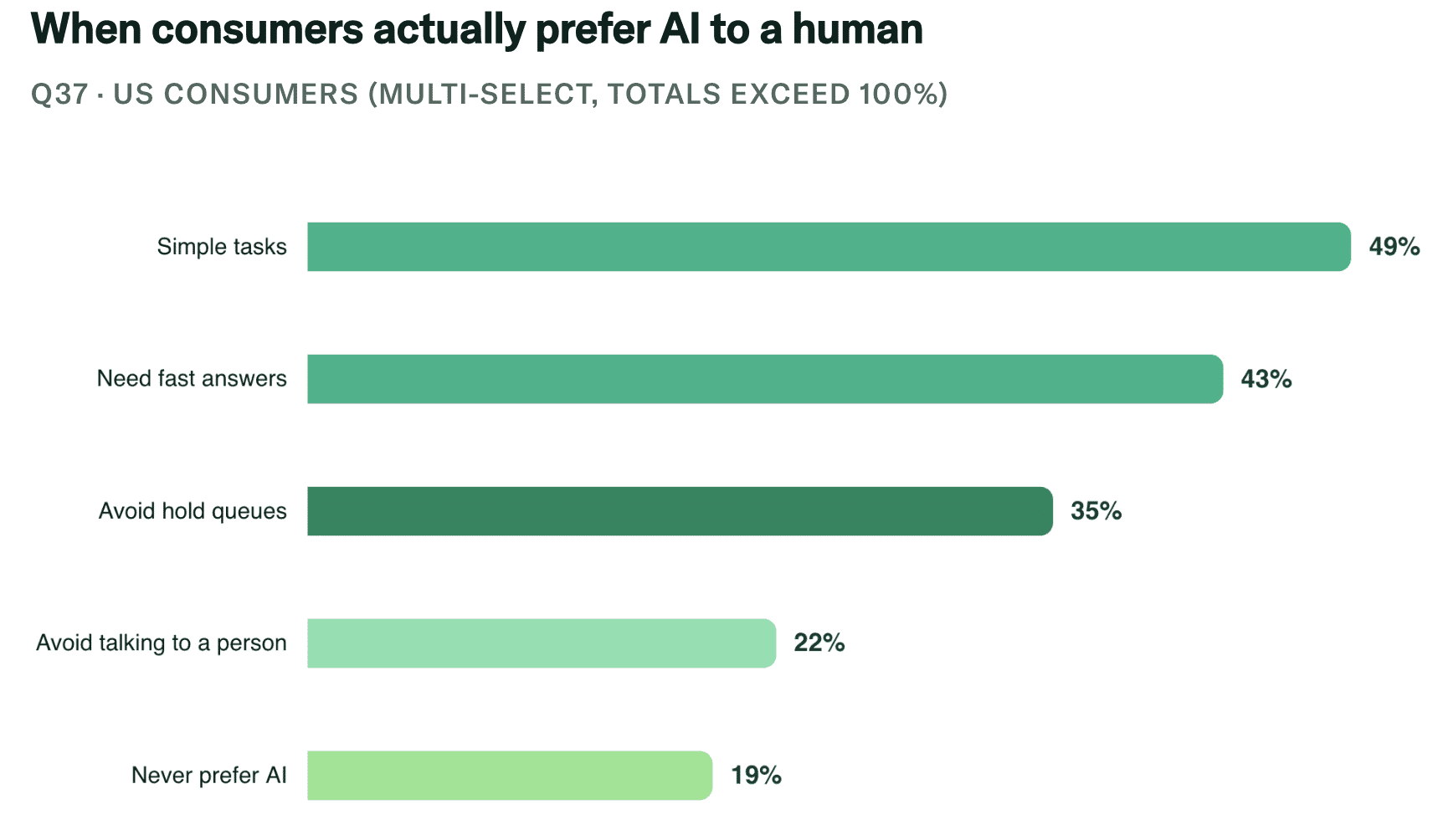
Tagline
Brands struggle to meet rising consumer AI expectations.
Who & For What
For a Tokyo-based CMO or Head of Digital Transformation evaluating current martech stack ROI, this highlights the urgency of moving beyond AI pilots to integrated, customer-facing solutions that meet evolving consumer demands.
vs. Japan Play
While Japanese brands like LINE and Mercari integrate AI for personalization, many JTCs still deploy AI primarily for internal efficiencies or simple chatbots, differing from the holistic, customer-journey focused AI demanded by consumers in this research.
Tokyo Take
Tokyo marketers should recognize that while consumer readiness for AI might vary by segment in Japan, the general direction is clear. The challenge isn't just technology adoption, but integrating AI into customer service and marketing workflows in a way that feels natural and valuable to the Japanese consumer, rather than a mere efficiency play. Local agencies like Dentsu and Hakuhodo are pushing AI solutions, but the focus must remain on demonstrable customer value.
A recent study, cited by MarTech.org in June 2026, highlights a significant disconnect between consumer expectations for AI-powered experiences and the current capabilities of many brands. Consumers are increasingly open to interacting with AI for various touchpoints, but organizations struggle with implementation.
This gap signals a potential loss of customer engagement and competitive disadvantage for brands failing to adapt. The research suggests that while consumers are accustomed to AI in personal technology — from voice assistants to personalized recommendations — they are not yet consistently encountering similar sophistication in brand interactions. This indicates that the perceived value of AI for consumers is high, yet its operationalization within marketing departments remains a challenge.
Brands face hurdles in integrating AI across their customer journey, from data infrastructure to talent acquisition. Many still view AI as a futuristic concept or a tool for internal efficiency, rather than a direct customer-facing enhancement. This often results in fragmented AI initiatives that fail to meet holistic consumer demands for personalized, efficient, and intuitive experiences. The market is saturated with vendors promising "AI-powered" solutions, but the actual deployment often falls short of these claims due to internal organizational complexities.
Consumers are ready for AI, but many brands are not.
The challenge is not merely technical; it involves strategic reorientation. Brands need to move beyond pilot projects and integrate AI deeply into their marketing operations and customer service. This includes rethinking data governance, ensuring ethical AI use, and training marketing teams to leverage AI tools beyond simple content generation. Without this shift, brand efforts risk appearing superficial or, worse, frustrating customers expecting more seamless interactions.
The coming quarters will likely see a bifurcation: brands that successfully bridge this gap will gain significant loyalty and market share, while those that do not risk alienating a segment of digitally native consumers. The focus will shift from *if* to *how* AI is deployed, emphasizing practical, measurable customer impact.
Related Stories

Ad Tech
Agentic Commerce Demands Direct Mail Discipline
As AI agents increasingly mediate purchases, marketers face a loss of control. The discipline of direct mail provides a framework for re-establishing brand ownership and measurement in automated commerce.

Ad Tech
AI's Data Mandate: Accuracy Trumps Scale for Marketers
As AI integrates deeper into marketing, Epsilon's Gillian MacPherson argues that the quality and relevance of data now outweigh sheer volume, fundamentally altering data investment priorities.

Ad Tech
AI Output Quality Requires Organizational Strategy, Not Just Prompts
Organizations struggle with managing generative AI's low-quality output. The issue is systemic, not merely about individual prompting skill.