Ad Tech|Index 01
Agentic AI is forcing a martech data reckoning
The operational costs of AI agents interacting with disparate marketing tools are pushing companies to centralize data, shifting martech economics.
- Via
- ADVERTISE TOKYO Editors
- Dateline
- TOKYO
- Date
- June 29, 2026
- Time
- 5 min read
Source
MarTech.org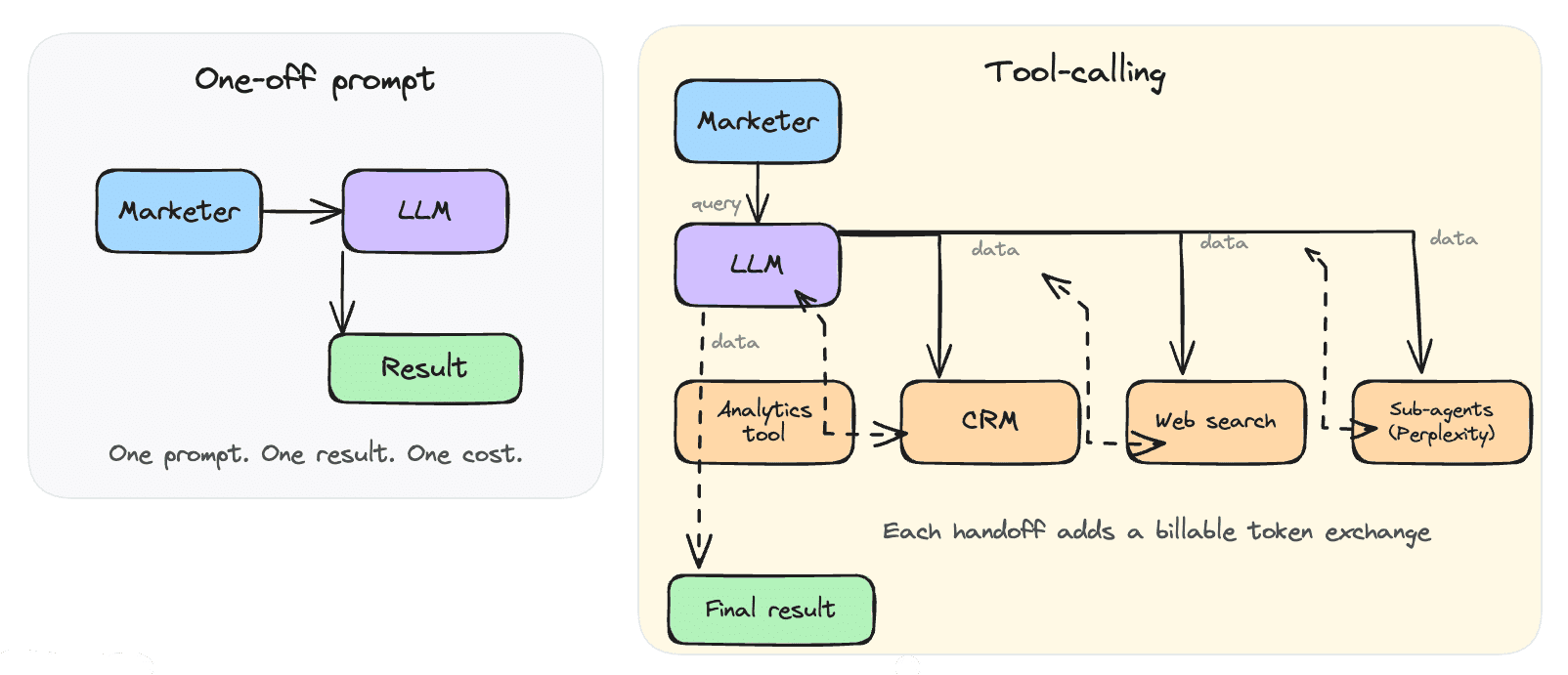
Tagline
Agentic AI is reshaping martech costs.
Who & For What
For a Tokyo-based adtech lead or marketing operations manager evaluating the cost efficiency of their existing martech stack and planning for future AI integration, offering a new lens on data architecture.
vs. Japan Play
This challenges the common Japanese practice of building bespoke integrations between various vendor tools by highlighting the hidden API call costs, contrasting with the Dentsu/Hakuhodo approach of often managing multiple disparate systems for clients.
Tokyo Take
Tokyo marketers must consider if their current data infrastructure, often fragmented across various SaaS and in-house systems, can handle the API call volumes and associated costs of agentic AI without budget overruns. Domestic CDP adoption, while growing, still faces challenges in fully integrating legacy systems and establishing a unified data layer that can mitigate these emergent AI operational costs.
Agentic AI is forcing a fundamental re-evaluation of marketing technology infrastructure and its underlying economics. This shift, highlighted in MarTech.org, points to a future where the operational costs of AI agents interacting with various tools will dictate how marketing teams manage their data and tech stacks.
The core problem lies in the volume of API calls generated by AI agents designed to interact across multiple SaaS tools. What appears as a fixed monthly subscription can quickly escalate into a variable expense as these agents execute numerous tasks, consuming API credits and triggering usage-based fees. The distributed nature of marketing data across numerous vendor silos exacerbates this issue.
The proposed solution is not to reduce the number of tools, but rather to change where marketing data resides. This suggests a renewed emphasis on robust Customer Data Platforms (CDPs) or similar unified data layers. By centralizing data, AI agents can access necessary information without incurring excessive cross-platform API fees, fundamentally shifting martech strategies from tool-centric to data-centric.
A single afternoon of tool-calling can eat a $20 monthly subscription.
This isn't merely about adopting new AI features; it's about a fundamental change in the economic model of martech. Traditional stacks often rely on data replication or manual transfers, and agentic AI now exposes the hidden costs of this fragmentation. Established CDP vendors like Segment and Tealium, along with bespoke data lake solutions, are becoming increasingly critical as central integration hubs.
Marketers must now account for an "AI tax" on their existing SaaS subscriptions. This necessitates evaluating vendor APIs not only for their functional capabilities but also for their cost efficiency under high-volume AI interaction. The long-term implication points towards a move to more open data standards or vendor ecosystems that offer cost-effective data access for agentic systems, challenging the siloed approach that has long characterized martech.
Related Stories

Ad Tech
Instacart expands ad offerings with video and AI assistant integration
The grocery delivery giant moves beyond performance marketing, aiming for full-funnel brand budgets.

Ad Tech
Synthetic Data: A Tool, Not a Replacement, for Customer Research
AI-generated insights offer new avenues for customer understanding, but require rigorous validation and clear governance to avoid misdirection.

Ad Tech
Cannes Confessional: The Reality of AI Adtech Deployment
Despite the awards and buzz, many marketers privately admit AI-driven personalization and creative automation are still far from mainstream for practical use.