Ad Tech|Index 01
Databricks launches CustomerLake, an 'agentic' CDP for marketing automation
The data lakehouse giant enters the martech space, promising autonomous AI for customer journeys. Its practical impact for marketers remains to be proven.
- Via
- ADVERTISE TOKYO Editors
- Dateline
- Tokyo, June 16, 2026
- Date
- June 16, 2026
- Time
- 6 min read
Source
MarTech.orgDatabricks enters CDP market with AI automation.
Tagline
Databricks enters CDP market with AI automation.
Who & For What
For a Tokyo-based CMO or head of marketing operations evaluating enterprise-level data infrastructure, assessing how AI can automate customer segmentation and campaign orchestration.
vs. Japan Play
This directly competes with global enterprise CDPs often implemented by major Japanese brands, like Salesforce Marketing Cloud or Adobe Experience Platform, but with a stronger data lakehouse foundation than many domestic integration offerings.
Tokyo Take
On Mars or the Moon, where resources are constrained and human interaction sparse, an agentic CDP's ability to automate hyper-personalized resource allocation and communication could be critical for colony cohesion and supply chain optimization, far beyond Earth's consumer marketing.
Databricks, a company best known for its data lakehouse platform, has formally launched CustomerLake, an "agentic" Customer Data Platform (CDP). This move marks its direct entry into the competitive marketing technology sector, aiming to leverage its data infrastructure expertise for customer engagement.
The core proposition of CustomerLake lies in its "agentic" capabilities, suggesting a shift beyond traditional data consolidation. An agentic system implies AI-driven automation that can autonomously interpret customer data, make decisions, and trigger marketing actions without constant human oversight. The ambition is to personalize customer journeys and optimize campaign performance through self-governing AI agents.
Specifically, CustomerLake is designed to operate on Databricks' existing data lakehouse architecture, which unifies data warehousing and data lakes. This foundation allows it to process large volumes of diverse customer data – from transactional records to web interactions – in real time. The platform aims to enable marketers to define high-level goals, with the underlying AI agents then executing segmentation, content recommendations, and campaign orchestration autonomously. The dispatch notes it was "built for an agentic era of marketing and shopping."
This entry positions Databricks against established CDP vendors such as Salesforce Marketing Cloud, Adobe Experience Platform, Segment, and Tealium. While many incumbents are integrating AI into their offerings, Databricks' approach emphasizes its data-centric heritage and the promise of a more deeply integrated, autonomous AI layer directly atop a unified data foundation. The challenge for Databricks will be to translate its data engineering prowess into tangible, marketer-friendly outcomes that outperform existing solutions.
The broader industry is watching how quickly "agentic" AI can move from concept to reliable application in marketing. Questions remain regarding the precision of autonomous decision-making, the ethical implications of AI-driven customer interactions, and the ease of integration with diverse existing martech stacks. Marketers will need clear evidence of incremental ROI and robust governance features before fully embracing such a paradigm.
Related Stories
Ad Tech
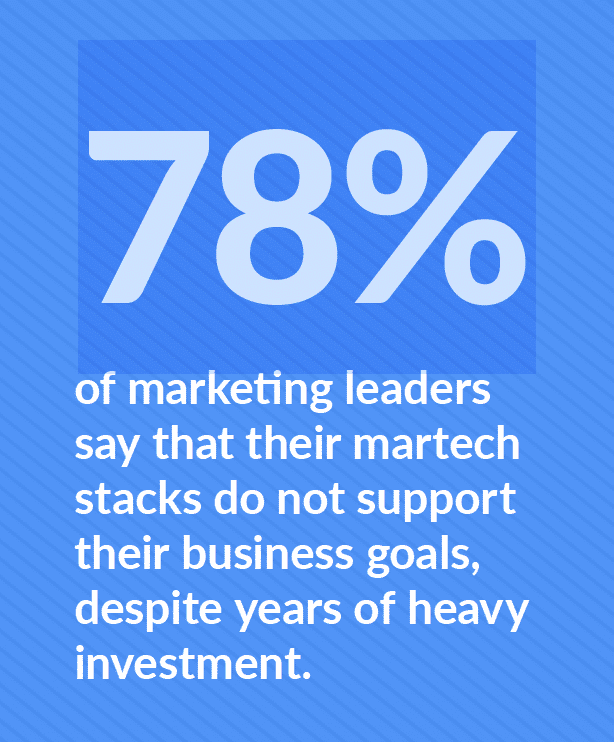
Martech's Core Problem Is Operational, Not Technical
A new survey reveals marketers struggle to leverage their existing technology stacks due to internal process and skill gaps, rather than a lack of software capability.

Ad Tech
OpenAI Ads Manager Expands to UK, Introduces CPC Bidding
OpenAI's self-serve advertising platform broadens its reach and offers performance-focused bidding, signaling a push for direct response spend.

Ad Tech
WPP trials AI media buying, prioritizes governance over pure automation
WPP's GroupM is piloting an AI buyer agent for video campaigns, but the holding company's strategic focus is on establishing robust governance frameworks for AI-driven media decisions, ensuring human oversight and ethical usage.