Ad Tech|Index 02
Digital Video Ad Spend Shifts Focus to Precision and Measurement
As digital video surpasses traditional TV in ad spending, marketers move beyond channel selection to advanced targeting, sophisticated measurement, and data-driven execution, challenging the industry's adtech capabilities.
- Via
- ADVERTISE TOKYO Editors
- Dateline
- Tokyo, July 14, 2026
- Date
- July 14, 2026
- Time
- 6 min read
Source
MarTech.org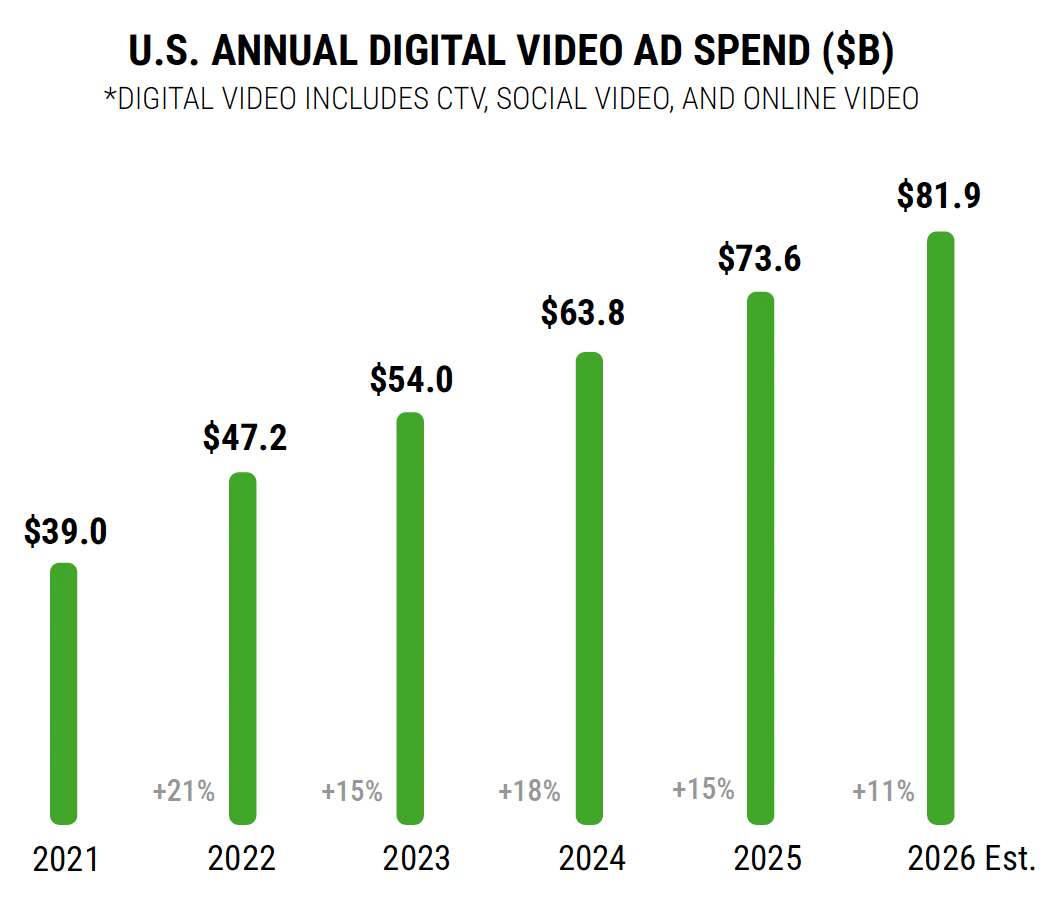
Tagline
Digital video ad spend matures. Focus shifts to precision.
Who & For What
For a Tokyo-based media planner or adtech specialist at a major agency or an in-house performance marketer at an EC brand, seeking to optimize digital video spend beyond simple reach.
vs. Japan Play
This contrasts with the traditional Dentsu or Hakuhodo approach of securing broad digital video inventory across major platforms; the new focus is on granular, cross-platform audience segmentation and incrementality measurement, which many Japanese agencies are still building out.
Tokyo Take
While global trends point to advanced targeting and measurement, Japan's digital video market, especially CTV and premium inventory, still prioritizes securing reach on platforms like TVer and ABEMA. True cross-platform identity resolution and sophisticated incrementality measurement remain nascent, often relying on platform-specific tools rather than unified solutions.
Digital video has now surpassed traditional linear television in ad spending, marking a significant strategic shift for marketers. This transition, highlighted by recent industry analysis, signals a mature phase where the mere allocation of budgets to digital channels is no longer the primary challenge. Instead, the focus has moved to optimizing performance *within* the digital video ecosystem.
The core shift lies in how marketers are approaching their digital video investments. Faced with fragmented audiences across numerous platforms and devices, the emphasis has moved from choosing between linear TV and digital to refining targeting capabilities, establishing robust measurement frameworks, and leveraging automation for campaign execution. The promise of "AI-powered execution" is frequently cited, though its practical impact often remains a veneer over established programmatic buying logic, rather than a fundamental change.
This evolution reflects the natural progression of any maturing media channel. What was once a question of "should we be on digital video?" has become "how precisely can we reach, measure, and optimize on digital video?" This involves deeper integration of first-party data, the use of advanced analytics to understand incrementality (the true incremental impact of advertising), and a move away from simple reach metrics towards attention and outcome-based measurement.
For advertisers, this means a renewed focus on the adtech stack itself. Demand-side platforms (DSPs) are evolving to offer more granular audience segmentation and cross-platform frequency capping. Measurement vendors are pushing beyond traditional viewability to provide metrics that attempt to quantify actual consumer engagement. The challenge is less about finding inventory and more about making that inventory work harder through sophisticated data application and real-time optimization.
The competitive landscape now revolves around who can deliver the most effective audience segmentation and the clearest path to ROI, rather than simply who has the most video impressions.
Digital video now dominates TV ad spending, shifting marketers' focus from channel selection to targeting, measurement, and AI-powered execution.
The next phase will likely see further consolidation of adtech vendors that can offer unified solutions across diverse digital video environments, from connected TV (CTV) to social platforms. Advertisers will demand greater transparency in measurement and clearer evidence of business outcomes, pushing platforms to move beyond proprietary metrics. The ongoing privacy shifts will also force innovation in identity resolution within these fragmented ecosystems, redefining how precision is achieved in a cookieless world.
Related Stories

Ad Tech
Open-Source MMM Lowers Cost, Not The Data Barrier
Free tools have democratized access to marketing mix modeling, but the real work of data quality and analytical expertise remains a significant hurdle for effective implementation.

Ad Tech
Evaluating AI Vendors: Beyond the Hype Cycle
With AI tools saturating the martech landscape, marketers must ask critical questions about business value, data handling, and integration before committing to a new solution.

Ad Tech
Email Marketing's Core Distinction: Transactional, Triggered, Promotional
Misunderstanding email types risks compliance and customer trust. A clear strategy for each is essential.