Ad Tech|Index 01
Healthcare Marketing Navigates a Fragmented Identity Landscape
As privacy regulations tighten and third-party cookies fade, healthcare brands are adopting a multi-signal approach to audience identification, prioritizing first-party data and contextual relevance over traditional targeting methods.
- Via
- ADVERTISE TOKYO Editors
- Dateline
- TOKYO
- Date
- June 22, 2026
- Time
- 7 min read
Source
Digiday
Tagline
Healthcare marketing adapts to privacy-first, mixed-signal identity.
Who & For What
For a brand manager at a pharmaceutical company or a media planner at an agency handling healthcare clients, needing to redefine audience targeting and measurement strategies for privacy-sensitive campaigns.
vs. Japan Play
This evolution parallels Japan's existing strict medical advertising guidelines and PIPA, but pushes further into adtech solutions like data clean rooms, which are still nascent compared to global adoption for sensitive data in Japan's ad market.
Tokyo Take
Tokyo marketers in healthcare must deepen their expertise in first-party data and contextual targeting. While Japan's regulatory environment is already strict, the adoption of advanced data clean room solutions seen abroad will require careful navigation with domestic adtech partners and a clear understanding of what medical advertising guidelines permit.
Healthcare marketing is recalibrating its approach to audience identification, moving away from reliance on individual-level data to a more complex, privacy-centric model. This shift is driven by stringent regulations like HIPAA in the United States and global privacy frameworks, alongside the broader industry transition away from third-party cookies. Marketers in this sector are now tasked with engaging sensitive audiences without direct personal identifiers, necessitating new strategies for media buying and measurement.
The core of this evolution is the adoption of a “mixed-identity” strategy. This means combining various non-PII (Personally Identifiable Information) signals: anonymized first-party data, aggregated demographic insights, contextual advertising placements, and privacy-enhancing technologies (PETs) such as data clean rooms. The goal is to build a holistic, yet privacy-compliant, view of potential patients and healthcare professionals, allowing for relevant messaging without compromising individual privacy.
This new paradigm significantly alters how media plans are constructed. Rather than segmenting audiences based on granular browsing history or declared health conditions, marketers are focusing on broader behavioral patterns, aggregated insights from clinical data where permissible, and the contextual relevance of media environments. Programmatic platforms are adapting by enhancing contextual targeting capabilities and integrating with clean room solutions, enabling brands to match their first-party data against publisher data in a secure, anonymized environment.
"The days of simply buying a list and targeting are over in healthcare; it's about building trust through relevant, privacy-safe connections."
Agencies and adtech vendors are developing sophisticated tools to support this transition. Data clean rooms, offered by platforms like Snowflake or Amazon Marketing Cloud, are becoming central to media planning, allowing multiple parties to collaborate on anonymized data sets without exposing raw patient information. This facilitates more precise audience segmentation and measurement of campaign effectiveness, even in a world without persistent individual identifiers.
The implications extend beyond targeting to creative development and measurement. Campaigns must resonate with broader audience segments and be adaptable to diverse contextual environments. Measurement shifts from individual conversion tracking to incrementality testing and aggregate brand lift studies, focusing on the overall impact rather than specific user journeys. This requires a more sophisticated understanding of marketing mix modeling and attribution in a privacy-constrained landscape.
Looking ahead, the healthcare sector will continue to push the boundaries of privacy-preserving advertising. The development of new identity solutions that balance utility with user consent, alongside advancements in federated learning and synthetic data generation, will shape the next phase. Marketers will need to remain agile, continually experimenting with new data collaboration models and measurement frameworks to maintain effectiveness in this evolving environment.
Related Stories

Ad Tech
Danone, Target, and DirecTV Partner to Link Premium Video Ads to Retail Sales
A new collaboration aims to provide closed-loop attribution for premium video campaigns, leveraging Target's first-party retail data to prove direct sales impact.
Ad Tech
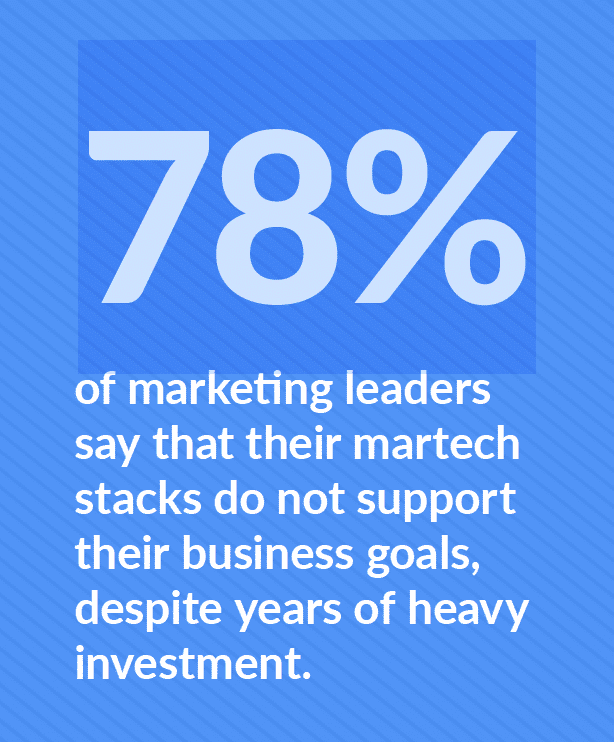
Martech's Core Problem Is Operational, Not Technical
A new survey reveals marketers struggle to leverage their existing technology stacks due to internal process and skill gaps, rather than a lack of software capability.

Ad Tech
OpenAI Ads Manager Expands to UK, Introduces CPC Bidding
OpenAI's self-serve advertising platform broadens its reach and offers performance-focused bidding, signaling a push for direct response spend.