Ad Tech|Index 01
The Hidden Fragility of Performance Marketing
Brands focused solely on measurable efficiency risk instability as AI and platform shifts redefine customer acquisition and discovery.
- Via
- ADVERTISE TOKYO Editors
- Dateline
- June 17, 2026
- Date
- June 17, 2026
- Time
- 4 min read
Source
MarTech.orgPerformance focus creates brand fragility.
Tagline
Performance focus creates brand fragility.
Who & For What
For Tokyo-based performance marketers and brand strategists reviewing Q3 media plans, this highlights the risks of over-reliance on platform-specific tactics in a rapidly evolving AI-driven discovery landscape.
vs. Japan Play
Unlike typical CyberAgent or Septeni performance plays optimized for specific platforms, this urges a broader strategy, acknowledging that even local platforms like LINE or Yahoo! JAPAN can introduce algorithmic shifts that destabilize campaigns.
Tokyo Take
Japanese brands, often deeply integrated with LINE or Yahoo! JAPAN for performance, need to assess their exposure to algorithmic changes. While domestic platforms offer stability, underlying AI advancements could still redefine customer discovery, requiring a re-evaluation of brand-building versus pure performance spend.
A recent analysis from MarTech.org, published on June 17, 2026, highlights the inherent risks in an exclusive focus on performance marketing. The discussion suggests that brands prioritizing only measurable efficiency can become critically vulnerable to external market shifts, particularly those driven by evolving platforms and artificial intelligence.
The core argument is that while performance marketing excels at optimizing for immediate conversions and short-term ROI, it often neglects broader brand-building efforts. When major platforms like Google or Meta fundamentally alter their algorithms, or when AI tools redefine how consumers discover products and services, brands without a resilient brand foundation struggle significantly. This vulnerability manifests as sudden drops in advertising effectiveness, increased customer acquisition costs, and a loss of direct consumer connection, forcing marketers to re-evaluate their entire spend allocation and strategic priorities.
The Shifting Discovery Landscape
The tension between brand and performance marketing is not a new debate. However, the accelerating pace of AI integration into search and social platforms, coupled with the ongoing deprecation of third-party cookies, amplifies this long-standing fragility. Previously, brands could rely on established funnels and predictable ad unit performance. Now, a brand optimized purely for a specific platform's ad unit or a singular attribution model finds its carefully constructed ecosystem exposed and unstable when that underlying mechanism shifts or disappears. The report points to a future where customer journeys are less linear and more influenced by algorithmic curation.
The report implies that platforms are increasingly evolving into AI-driven discovery engines, rather than mere repositories of information or social interaction. Instead of users initiating direct search queries for specific products, AI assistants, personalized content feeds, and conversational interfaces guide them towards solutions. Brands that have heavily invested in traditional keyword bidding, direct response ad creative, or static product listings may find their carefully constructed conversion funnels bypassed entirely by these new discovery paradigms. This shift demands a re-evaluation of creative assets, audience targeting, and the very definition of "reach" and "engagement."
For marketers, this signals a critical need for diversification and strategic foresight. Brands must cultivate a balanced portfolio that includes longer-term brand equity building, investment in diversified media channels, and a deeper understanding of customer behavior that extends beyond immediate click-through rates. This means re-investing in creative that genuinely resonates, exploring new content formats that align with AI-driven discovery, and building direct relationships with consumers that are not solely mediated by advertising platforms. The objective is to build a brand that is discoverable and desirable regardless of the specific algorithmic winds.
The pursuit of measurable efficiency can leave brands vulnerable when competitors, platforms, or AI reshape customer discovery.
What comes next
Marketers should monitor how AI models within major platforms — both global and domestic — evolve their recommendation engines and content curation, and how this impacts organic and paid reach for different content types. The ability to adapt creative and distribution strategies to these evolving AI models will be a key differentiator.
Related Stories
Ad Tech
Martech's Core Problem Is Operational, Not Technical
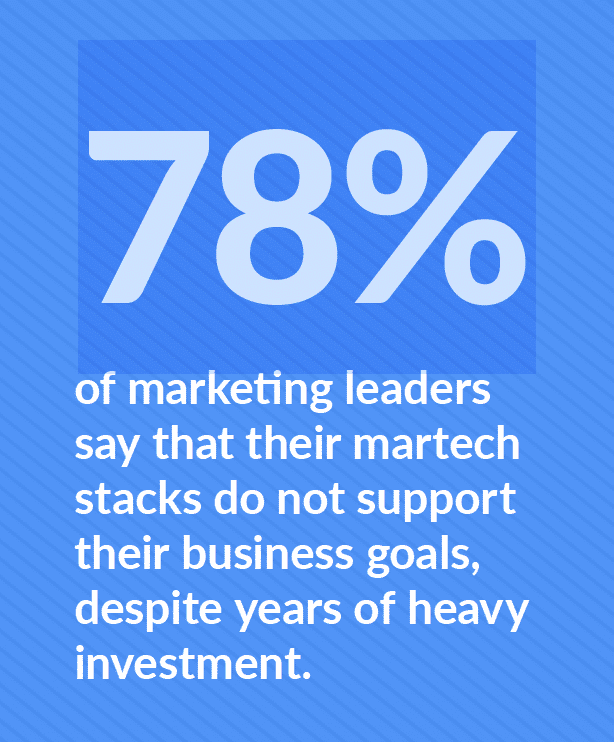
A new survey reveals marketers struggle to leverage their existing technology stacks due to internal process and skill gaps, rather than a lack of software capability.

Ad Tech
OpenAI Ads Manager Expands to UK, Introduces CPC Bidding
OpenAI's self-serve advertising platform broadens its reach and offers performance-focused bidding, signaling a push for direct response spend.

Ad Tech
WPP trials AI media buying, prioritizes governance over pure automation
WPP's GroupM is piloting an AI buyer agent for video campaigns, but the holding company's strategic focus is on establishing robust governance frameworks for AI-driven media decisions, ensuring human oversight and ethical usage.