Ad Tech|Index 02
Beyond SEO: Diagnosing Website Traffic Drops in the AI Era
A new framework from MarTech.org helps marketers distinguish between ranking losses, AI click theft, shifting intent, and declining demand when website traffic falls.
- Via
- ADVERTISE TOKYO Editors
- Dateline
- Tokyo, July 20, 2026
- Date
- July 20, 2026
- Time
- 6 min read
Source
MarTech.org
Tagline
Diagnose traffic drops beyond just SEO.
Who & For What
For Tokyo-based content strategists and SEO managers at B2B SaaS or e-commerce brands who need to justify organic channel performance and avoid misallocating content resources.
vs. Japan Play
This framework challenges the common Japanese agency playbook of immediately recommending keyword research and content refreshes for traffic drops, by adding a crucial pre-analysis step for demand and intent shifts.
Tokyo Take
While the principles are universal, the specific impact of "AI click theft" from SGE is less pronounced in Japan given slower SGE rollout and different search behavior. Tokyo marketers should prioritize demand shifts and local SERP feature analysis (e.g., Yahoo! JAPAN ナレッジ、LINE Search) before assuming global AI trends.
A new framework from MarTech.org addresses the common challenge of diagnosing website traffic declines, urging marketers to look beyond immediate SEO fixes. The piece published on July 20, 2026, posits that not all traffic drops indicate a content problem or a ranking penalty.
The core mechanism involves a four-part diagnostic test designed to differentiate between distinct causes. Instead of assuming a Google algorithm update or a keyword ranking issue, the framework guides marketers to first assess broader market dynamics and search behavior shifts. This approach aims to prevent misallocated resources on content refreshes when the root cause lies elsewhere.
How the diagnostic works
The diagnostic begins by evaluating overall demand for a topic, then analyzes user intent shifts, followed by assessing "AI click theft" where large language models or SERP features answer queries directly. Only after these broader factors are ruled out does the framework suggest examining traditional ranking losses. This systematic method contrasts with the common reflex to immediately audit keywords and content performance.
This perspective is particularly relevant as AI integration into search results evolves. Google's Search Generative Experience (SGE), for instance, can directly answer complex queries, potentially reducing the need for users to click through to websites. This phenomenon, termed "AI click theft" by some, shifts the value proposition for publishers and content marketers, requiring a re-evaluation of content strategy beyond just ranking high.
The implication for marketers is a need for more nuanced analytics. Simple traffic metrics become insufficient; understanding *why* traffic changed — whether due to genuine disinterest, fulfilled intent on the SERP, or a competitive ranking shift — becomes critical. Teams will need to integrate external trend data and SERP feature analysis more deeply into their routine performance reviews.
The article emphasizes a crucial first step:
"Before you refresh that page, run this test."
This suggests a move away from reactive content updates towards proactive, data-driven diagnostics that account for the changing nature of search and information consumption.
Related Stories

Ad Tech
Branded Search: A Lagging Indicator of Demand
Consumers are making purchase decisions before branded searches, challenging traditional measurement of brand demand.

Ad Tech
Salesforce's AI Woes Highlight Enterprise Data Readiness Problem
Salesforce's AI adoption challenges reveal a universal truth: advanced tools are useless without clean data. Tokyo marketers face amplified versions of these data readiness hurdles.
Ad Tech
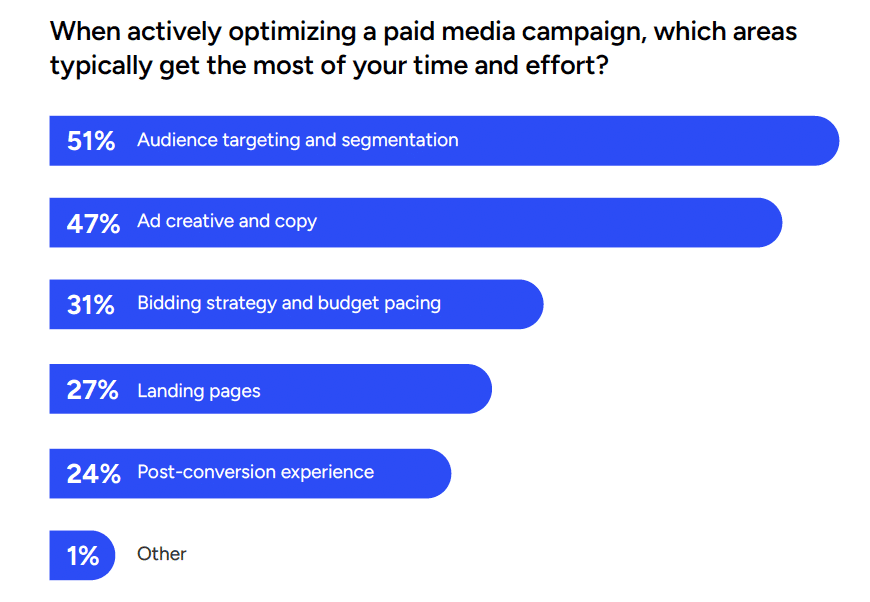
Marketers Miss Post-Click ROI Opportunities, Study Finds
New research suggests marketers prioritize ad targeting and creative over the post-click experience, despite knowing the latter drives paid media ROI. This creates a clear disconnect between stated knowledge and budget allocation.