Ad Tech|Index 02
Martech's Quiet Reshaping: Beyond AI Hype
While AI captures headlines, marketers are quietly focusing on practical shifts in stack consolidation, advanced measurement, and flexible content strategies.
- Via
- ADVERTISE TOKYO Editors
- Dateline
- TOKYO, July 17, 2026
- Date
- July 17, 2026
- Time
- 4 min read
Source
MarTech.org
Tagline
Practical martech shifts overshadow AI hype.
Who & For What
For a Tokyo-based marketing operations lead or a CMO evaluating their tech stack, this outlines the strategic priorities for efficiency and measurable impact beyond AI buzz.
vs. Japan Play
This contrasts with the prevalent "AI-first" narrative often promoted by Japanese adtech vendors, instead emphasizing foundational operational improvements that local agencies like CyberAgent or Septeni are increasingly focused on with their own operational consulting.
Tokyo Take
While AI discussions dominate Tokyo's martech events, these shifts highlight the need for Japanese brands to audit existing tools and invest in robust data foundations before chasing advanced AI applications.
The martech landscape, as observed in mid-2026, is quietly undergoing fundamental shifts that extend beyond the pervasive discourse around artificial intelligence. Marketers are increasingly prioritizing operational efficiency through stack rationalization, adopting more sophisticated measurement methodologies, and developing modular content strategies. These changes reflect a pragmatic response to persistent challenges in managing complex marketing ecosystems and demonstrating tangible business impact.
Stack rationalization involves a critical audit of existing marketing technology tools to eliminate redundancies and improve integration. Many organizations currently contend with fragmented systems, leading to data silos and inefficient workflows. Consolidating core platforms such as customer data platforms (CDPs), customer relationship management (CRM) systems, and marketing automation solutions streamlines operations, reduces technical debt, and ensures more consistent data flow across the marketing function. This focus on architectural cleanliness is a direct counterpoint to the tendency to add new tools without fully integrating them.
Parallel to this, modern measurement practices are evolving beyond traditional last-click attribution models. Marketers are now emphasizing incrementality testing, media mix modeling (MMM), and attention metrics to gain a more holistic understanding of campaign effectiveness. This shift acknowledges that consumer journeys are complex and that true return on investment requires accounting for the synergistic effects of various touchpoints. The goal is to allocate budgets more effectively by understanding which channels and creative elements genuinely drive business outcomes, rather than merely tracking immediate conversions.
"The real story isn't about what AI can do on its own, but how it enables marketers to finally get their house in order."
The third key trend is the move towards modular content. This strategy involves breaking down creative assets into reusable components that can be dynamically assembled for diverse channels, audiences, and personalization needs. Managed often through headless content management systems (CMS) or digital asset management (DAM) platforms, modular content allows for greater agility and consistency in campaign deployment. It enables brands to scale personalization without proportional increases in creative production costs, responding to the demand for tailored experiences across an expanding array of digital touchpoints.
These practical shifts represent a maturation of the martech sector. While AI continues to garner significant attention, its most impactful applications often lie in enabling these foundational improvements—automating data integration, enhancing predictive analytics for measurement, or facilitating dynamic content assembly. The underlying driver is not technological novelty, but the enduring need for operational efficiency and demonstrable business impact. Marketers are seeking tangible improvements in their day-to-day operations and clearer pathways to ROI, rather than abstract promises of future capabilities.
What comes next is a continued re-evaluation of marketing technology investments. Companies will increasingly favor platforms that offer robust integration capabilities and clear pathways to advanced measurement, rather than those solely touting AI features as a primary differentiator. The emphasis will remain on foundational strength and the ability to connect marketing efforts directly to commercial results.
Related Stories

Ad Tech
Salesforce's AI Woes Highlight Enterprise Data Readiness Problem
Salesforce's AI adoption challenges reveal a universal truth: advanced tools are useless without clean data. Tokyo marketers face amplified versions of these data readiness hurdles.
Ad Tech
Marketers Miss Post-Click ROI Opportunities, Study Finds
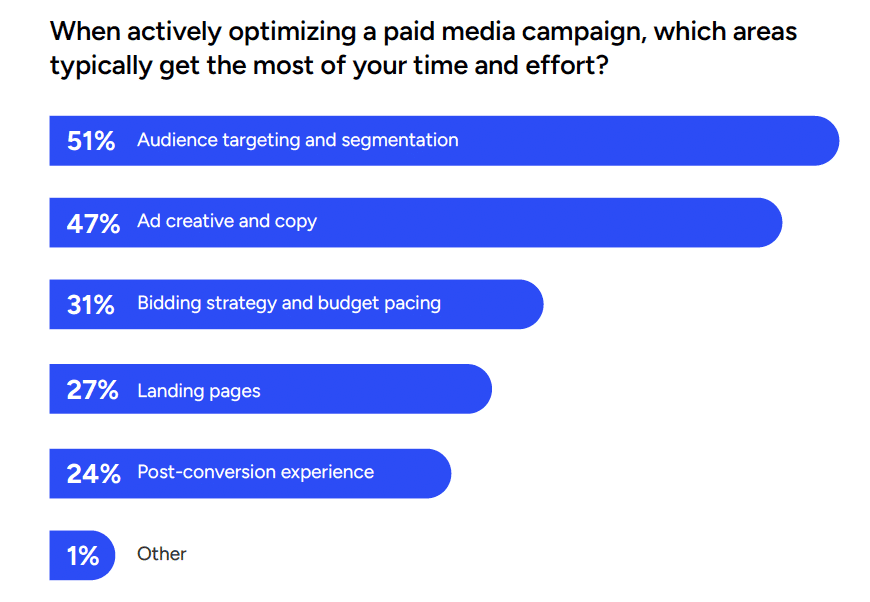
New research suggests marketers prioritize ad targeting and creative over the post-click experience, despite knowing the latter drives paid media ROI. This creates a clear disconnect between stated knowledge and budget allocation.

Ad Tech
Marketers Demand Clearer Media Measurement, Challenging Ambiguity
Brands worldwide are pushing back against vague measurement standards, seeking direct links between ad spend and business outcomes. This shift redefines agency accountability.