Ad Tech|Index 05
Personalization's Identity Crisis: Beyond Transactional Offers
Brands struggle to move past behavioral data to truly recognize customers, risking alienation as consumers demand more than just tailored offers.
- Via
- ADVERTISE TOKYO Editors
- Dateline
- October 23, 2026
- Date
- October 23, 2026
- Time
- 6 min read
Source
MarTech.org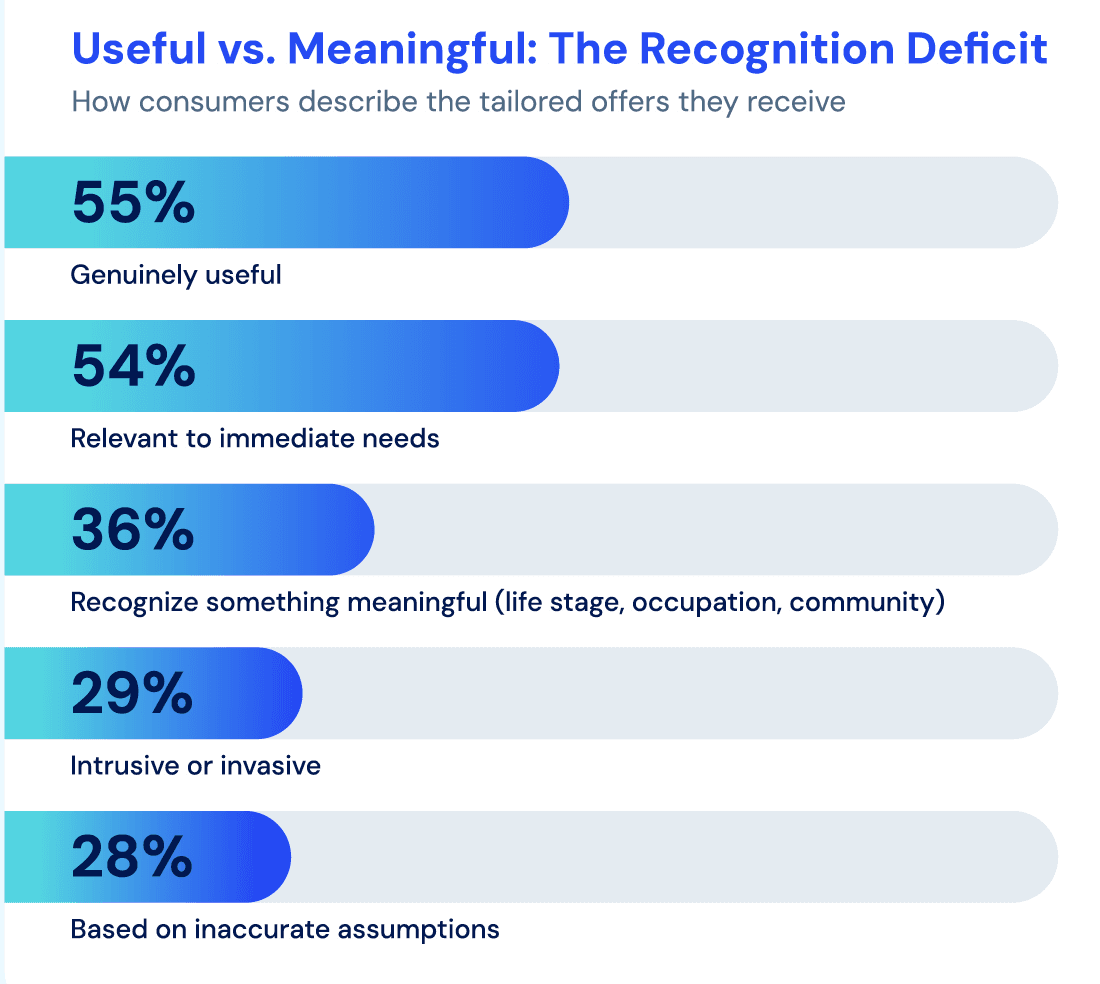
Tagline
Personalization needs to know who, not just what.
Who & For What
For a brand manager or agency strategist in Tokyo assessing their CDP implementation, seeking to move beyond generic offers to build deeper customer loyalty and trust.
vs. Japan Play
This contrasts with common Japanese loyalty programs and CRM efforts that often focus on aggregated customer segments rather than individual identity, pushing for a more nuanced data strategy.
Tokyo Take
Japanese consumers are often wary of intrusive data collection without clear value. This calls for Tokyo marketers to prioritize transparency and explicit value exchange in personalization, moving beyond simple transactional offers. Local CDPs and data clean rooms must evolve to support deeper, ethical identity understanding, rather than just behavioral targeting, aligning with a cultural preference for long-term relationships over quick sales.
MarTech.org recently highlighted a critical flaw in current personalization strategies: a focus on predicting consumer wants rather than understanding their identity. This critique, published in October 2026, posits that while brands are adept at delivering useful offers based on observed behavior, they largely fail to provide meaningful recognition.
The issue stems from a reliance on transactional data — purchase history, browsing patterns, click-through rates — which informs what a customer might buy next, but not who they are as individuals. This approach, prevalent across many marketing technology stacks, optimizes for immediate conversion but often misses the deeper psychological drivers of brand loyalty. Consumers, the article notes, are increasingly wary of brands that demand extensive personal data without offering a clear, reciprocal value.
"Useful offers are common. Meaningful recognition is not, and consumers are quick to walk when brands ask for too much without a clear reason."
Modern personalization platforms, including Customer Data Platforms (CDPs) and various AI-driven recommendation engines, excel at clustering users into segments and serving dynamic content. However, the article implies that these systems often prioritize predictive analytics over qualitative insights or contextual understanding. The result is a stream of relevant, but ultimately impersonal, suggestions that can feel intrusive or generic, eroding trust rather than building it.
This sentiment echoes a broader industry debate around the limitations of data-driven marketing when disconnected from human insight. While global brands continue to invest heavily in martech stacks designed for hyper-segmentation, the return on investment in genuine customer affinity remains elusive. The challenge lies in moving beyond the efficiency of automated targeting to cultivate genuine, human-centric connections that resonate with individual values and life stages.
For marketers, this signals a need to re-evaluate personalization KPIs beyond conversion rates. It suggests a pivot towards metrics that capture brand sentiment, perceived value, and long-term customer lifetime value. Future personalization efforts will likely require a richer blend of declared data, qualitative feedback, and ethical AI that can infer context without overstepping privacy boundaries, fostering a sense of being truly understood rather than merely tracked.
In an era where human presence extends beyond Earth, the challenge of meaningful recognition will only intensify. On lunar bases or Martian settlements, where isolation and extreme environments redefine human connection, brands aiming to serve these nascent communities will find transactional personalization utterly insufficient. Understanding the core identity, resilience, and unique needs of an off-world consumer, without the luxury of abundant behavioral data, will demand a profound empathy that transcends algorithms. The future of brand-customer relationships, whether terrestrial or extraterrestrial, hinges on this ability to connect beyond the data point.
Related Stories
Ad Tech
Marketing's Profit Gap: From Dashboards to Boardroom Impact
Marketing dashboards excel at campaign metrics, but linking customer behavior to profit and growth remains a strategic challenge for CMOs.

Ad Tech
AI Drives Discovery, Human Reviews Seal Purchase
New research shows algorithms surface products, but social proof from peers remains the ultimate conversion driver. Marketers must balance AI reach with authentic user-generated content strategies.

Ad Tech
Omnicom's Data Integration Nears Completion, Showing Early Returns
The agency holding company's push to unify internal data and media platforms is yielding measurable improvements in campaign performance and efficiency, setting a precedent for global operations.