Ad Tech|Index 05
AI Budgets Outpace Proven Marketing ROI
Companies are increasing AI spend, but marketing teams struggle to show clear financial value from pilot projects.
- Via
- ADVERTISE TOKYO Editors
- Dateline
- October 9, 2026
- Date
- October 9, 2026
- Time
- 6 min read
Source
MarTech.org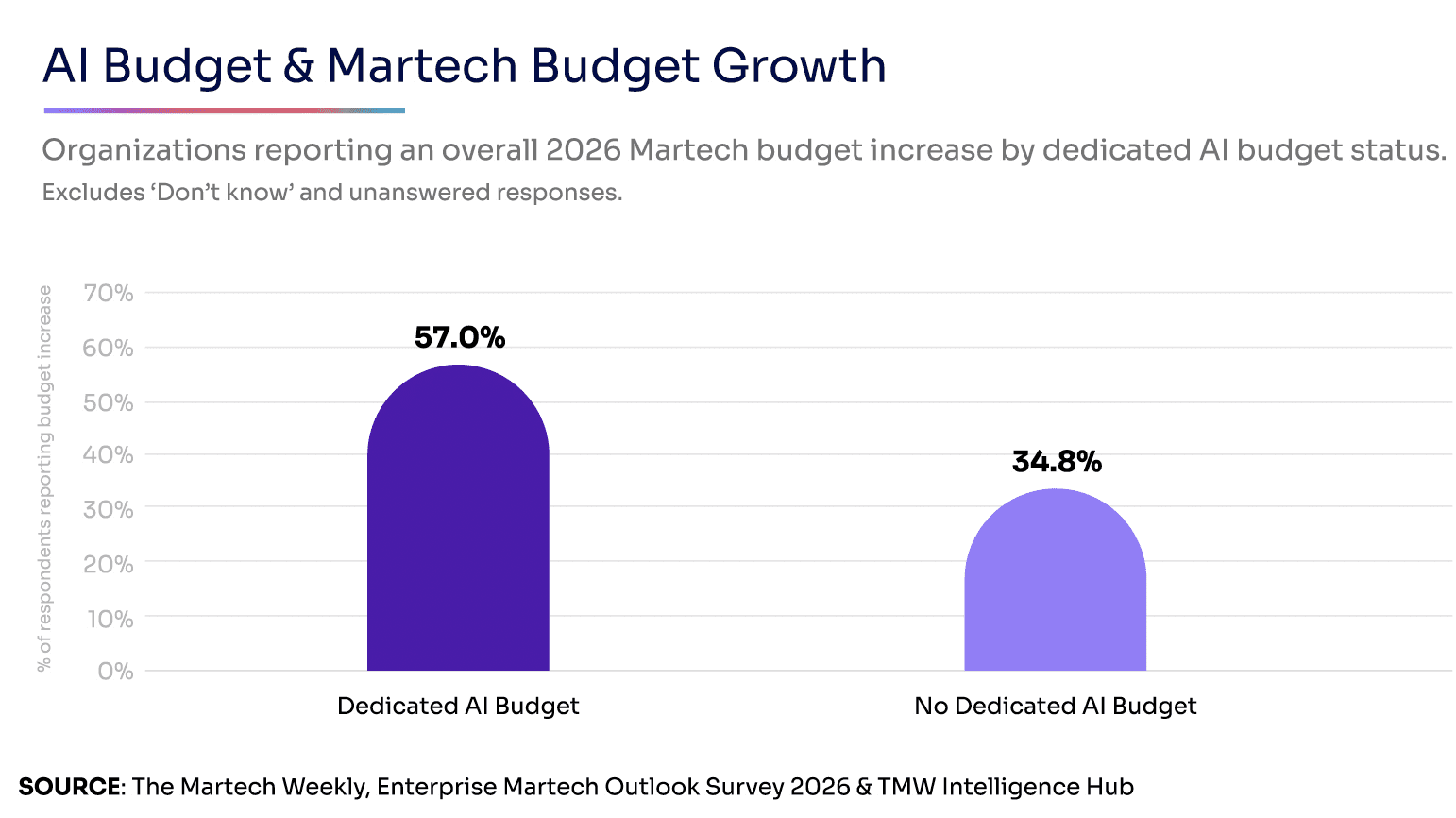
Tagline
AI spend up, ROI proof lags.
Who & For What
For CMOs and marketing operations leads evaluating AI tool adoption and budget allocation, especially those struggling to justify existing AI investments to finance.
vs. Japan Play
Unlike the focused adoption of specific AI features within existing platforms like LINE Ads or Yahoo! JAPAN DSP for optimization, this global trend points to broader, often unproven, standalone AI project investment.
Tokyo Take
Tokyo marketers will find this familiar; many local AI pilots remain departmental experiments. The challenge is less about access to AI, and more about integrating it into existing stacks and demonstrating clear business impact within JTC budget cycles.
Companies are significantly increasing their budgets for artificial intelligence initiatives, yet many marketing teams are struggling to demonstrate a clear return on investment (ROI) from these expenditures. This trend indicates a growing gap between the enthusiasm for AI adoption and the tangible financial value it delivers, particularly as most projects remain in pilot phases rather than achieving full operational scale.
This disconnect poses a challenge for CMOs and marketing operations leads. While the allure of AI promises efficiency gains and enhanced personalization, the practical reality often involves substantial upfront investment in tools, talent, and integration, without a corresponding, easily quantifiable uplift in key performance indicators. The summary notes that many "agent projects" are short of full scale, suggesting that the more sophisticated, autonomous AI applications are particularly difficult to embed into core marketing workflows and prove out financially.
The current landscape sees marketing departments allocating significant capital to AI tools, ranging from generative AI for content creation to predictive analytics for audience segmentation and media buying optimization. However, the operational hurdles—data integration complexities, talent gaps in prompt engineering or AI model management, and the sheer pace of technological change—often prevent these investments from translating into measurable business outcomes that satisfy finance departments.
AI budgets are growing faster than proof of ROI.
This situation highlights a broader industry tension: the pressure to adopt emerging technologies versus the fundamental business need to justify every dollar spent. Many AI projects, while technologically impressive, are still in a phase where their true impact on the bottom line is conceptual rather than proven. Marketers are left defending budgets for tools that promise future benefits but deliver limited present-day financial results.
What comes next
The onus will increasingly be on AI vendors to provide more robust, transparent attribution models and case studies that clearly link their solutions to specific, measurable business outcomes. For marketers, the focus will shift from merely experimenting with AI to strategically integrating it into their existing tech stacks and developing clearer frameworks for measuring its incremental value. This will require closer collaboration between marketing, data science, and finance teams to define success metrics beyond simple efficiency gains.
Off-world implications
As humanity expands its presence beyond Earth, the challenge of proving ROI for advanced technologies will only intensify. Whether optimizing resource allocation for Martian colonies or personalizing communications for lunar habitats, the need to justify every investment in an extraterrestrial economy will be paramount. The lessons learned from the current terrestrial struggle to measure AI's marketing impact will likely inform how future off-world ventures approach technological adoption and fiscal accountability, ensuring that even in the vastness of space, every byte of data and every automated decision serves a clear purpose.
Related Stories

Ad Tech
Omnicom's Data Integration Nears Completion, Showing Early Returns
The agency holding company's push to unify internal data and media platforms is yielding measurable improvements in campaign performance and efficiency, setting a precedent for global operations.

Ad Tech
Integrated Adtech Platforms Consolidate Media Buying and Intelligence
As digital advertising fragments across channels and data silos, platforms are consolidating supply, demand, and data intelligence to offer marketers a single operating picture.

Ad Tech
Salesforce acquires Braze, aiming for integrated customer activation
The $5.7 billion deal could bridge data and real-time engagement, but integration complexity remains a core challenge for marketers.