Ad Tech|Index 05
Salesforce acquires Braze, aiming for integrated customer activation
The $5.7 billion deal could bridge data and real-time engagement, but integration complexity remains a core challenge for marketers.
- Via
- ADVERTISE TOKYO Editors
- Dateline
- Tokyo, October 20, 2026
- Date
- October 20, 2026
- Time
- 6 min read
Source
MarTech.org
Tagline
Salesforce buys Braze: CDP meets activation.
Who & For What
For a Tokyo-based performance marketer at a D2C brand managing customer lifecycle journeys, seeking real-time personalization across owned channels.
vs. Japan Play
This challenges domestic CDP/MA players like Treasure Data or KARTE, offering a potentially tighter integration of data unification and real-time messaging than current local offerings.
Tokyo Take
While the scale of Salesforce's ecosystem is vast, the practical integration of Braze's real-time capabilities into a typical Japanese brand's existing stack, often fragmented across LINE, email, and app, remains a complex project. Expect local implementation partners to be key.
Salesforce has acquired Braze, a customer engagement platform, in a $5.7 billion deal. This move aims to more tightly connect Salesforce's extensive data foundation with Braze's real-time customer activation capabilities across various channels.
The primary objective is to bridge the gap between unified customer data and dynamic, personalized engagement. Salesforce's Data Cloud, its customer data platform (CDP), collects and unifies customer profiles. Braze, conversely, specializes in delivering real-time, context-aware messages via email, push notifications, and in-app experiences, based on immediate customer behavior.
This acquisition addresses a persistent challenge for marketers: translating static customer segments into timely, relevant interactions. Braze's strength lies in its ability to trigger messages based on live customer actions, a capability that often requires complex custom integrations when pairing traditional CDPs with activation tools.
Salesforce has a history of integrating significant acquisitions into its broader Marketing Cloud suite; past examples include ExactTarget for email marketing and Demandware for e-commerce. The current question centers on how Braze's distinct real-time architecture will merge with Salesforce's existing journey orchestration tools without creating redundant functionalities or additional complexity.
The customer engagement market is consolidating around integrated suites that promise a single view of the customer and unified activation. Competitors in this space include Adobe Experience Cloud, Oracle CX, and standalone CDPs like Treasure Data, alongside other engagement platforms such as Twilio Segment and Iterable.
For marketers, the success of this deal hinges on Salesforce's ability to deliver a coherent, simplified product roadmap. Navigating potential overlaps with existing Salesforce Marketing Cloud components, particularly journey builders and email platforms, will be a key consideration, ensuring the acquisition adds clarity rather than another layer of tools.
The $5.7 billion acquisition could tighten the link between data and activation — or leave marketers managing another overlapping layer.
For marketers in Tokyo, the immediate operational impact is likely limited. While both Salesforce and Braze maintain a presence in Japan, the substantial integration work following a $5.7 billion acquisition takes time. Japanese brands often rely heavily on LINE as a primary customer communication channel, and the seamless integration of Braze's real-time capabilities with LINE's ecosystem will be a critical factor for meaningful local adoption. Many Japanese companies already leverage domestic CDP/MA solutions like KARTE or Treasure Data, or build custom integrations with local agencies. The promise of a truly unified global platform needs to translate into tangible, localized benefits that simplify existing complex stacks, rather than adding another vendor to manage. The long-term success will depend heavily on local implementation partners who can bridge the gap between global product vision and specific market realities.
Related Stories

Ad Tech
Omnicom's Data Integration Nears Completion, Showing Early Returns
The agency holding company's push to unify internal data and media platforms is yielding measurable improvements in campaign performance and efficiency, setting a precedent for global operations.

Ad Tech
Integrated Adtech Platforms Consolidate Media Buying and Intelligence
As digital advertising fragments across channels and data silos, platforms are consolidating supply, demand, and data intelligence to offer marketers a single operating picture.
Ad Tech
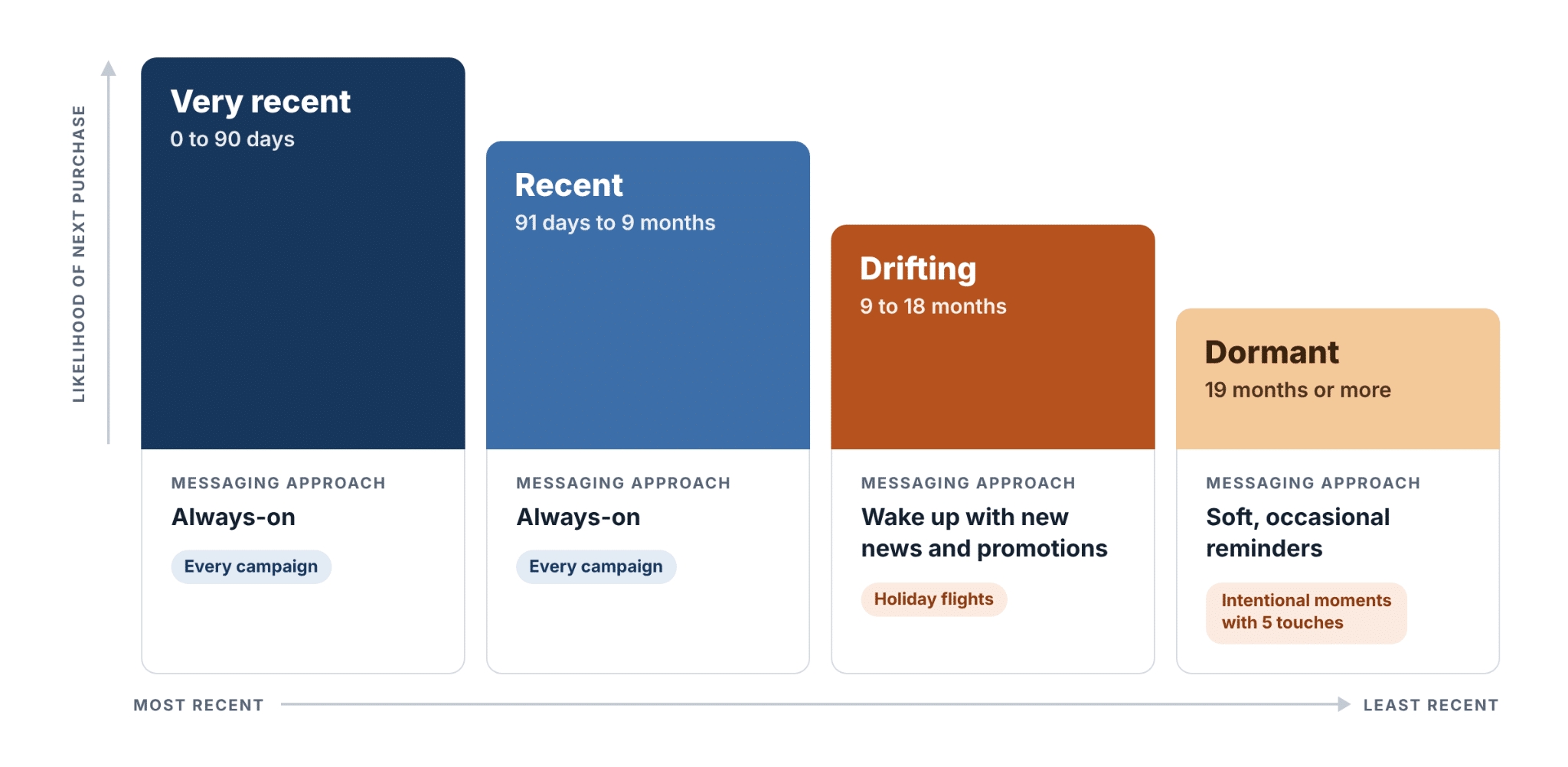
Recency-Based CRM Segmentation for Holiday Repeat Purchases
MarTech.org outlines a fundamental CRM strategy: segmenting customers by purchase recency to drive repeat purchases during holiday seasons, coordinating outreach across email and paid media channels for optimal resource allocation.