Ad Tech|Index 02
Beyond Ad Spend: Proving Performance Before Scaling
Increasing marketing budgets without validating their incremental impact risks significant waste. Marketers must prioritize testing frameworks over simple spend growth.
- Via
- ADVERTISE TOKYO Editors
- Dateline
- Tokyo, July 16, 2026
- Date
- July 16, 2026
- Time
- 6 min read
Source
MarTech.org
Tagline
Scaling budgets demands proven incrementality.
Who & For What
For a Tokyo-based brand manager or performance marketer justifying budget increases, this piece outlines the critical need to demonstrate incremental ROI before scaling spend.
vs. Japan Play
This contrasts with traditional large-scale, reach-focused media buying prevalent in Japan, offering a framework for domestic agencies like CyberAgent or Septeni to differentiate through rigorous performance validation.
Tokyo Take
Japan's media landscape often prioritizes reach over granular incrementality, but digital platforms and specialized agencies now offer the tools. The challenge for JTCs is to demand rigorous proof or build in-house testing capabilities, connecting ad spend to the business's sustainable growth, not just immediate sales.
For many brands, the natural inclination is to increase advertising spend when growth is desired. However, simply allocating more budget does not guarantee improved marketing performance or business outcomes. The core challenge for marketers today is to demonstrate the incremental value of every dollar before committing to large-scale media buys. This principle, often discussed but less frequently executed, demands a shift from measuring output (spend, impressions) to measuring actual business impact (sales, profit).
The pressure to scale quickly often bypasses crucial validation steps. Brands find themselves pouring resources into channels or campaigns that have not proven their efficiency or effectiveness at a smaller scale. This results in diminishing returns and an inability to articulate a clear return on investment. The industry conversation is slowly moving past vanity metrics to focus on what genuinely drives business growth.
"More budget doesn't guarantee better results. The strongest campaigns prove they work before they scale."
The practical application of this principle involves robust testing and measurement frameworks. Incrementality testing, for example, uses controlled experiments to isolate the true impact of an ad campaign by comparing exposed groups to unexposed control groups. This goes beyond simple attribution models, which can often overcredit touchpoints. Media mix modeling (MMM) offers a top-down approach to understand the macro impact of various marketing channels, helping allocate budgets more strategically across the entire media portfolio. These methods provide the evidence required to justify scaling.
While platforms like Meta and Google offer their own measurement tools, an independent, first-party approach to incrementality testing is increasingly critical. This allows brands to assess performance across a fragmented media landscape without relying solely on a single platform's reporting. Companies like Measured or tools built in-house can provide the necessary objectivity. The goal is to establish a clear causal link between marketing investment and business results, not just correlations.
This emphasis on validated performance also informs the relationship between brands and their agency partners. Instead of simply requesting budget increases, brands can challenge agencies to design campaigns with built-in testing methodologies. This fosters a culture of accountability and continuous optimization, where every campaign starts with a hypothesis to be proven, not just a target to be met.
Related Stories

Ad Tech
Marketers Demand Clearer Media Measurement, Challenging Ambiguity
Brands worldwide are pushing back against vague measurement standards, seeking direct links between ad spend and business outcomes. This shift redefines agency accountability.
Ad Tech
Web Push Ads Seek Legitimacy Amidst Maturing Market
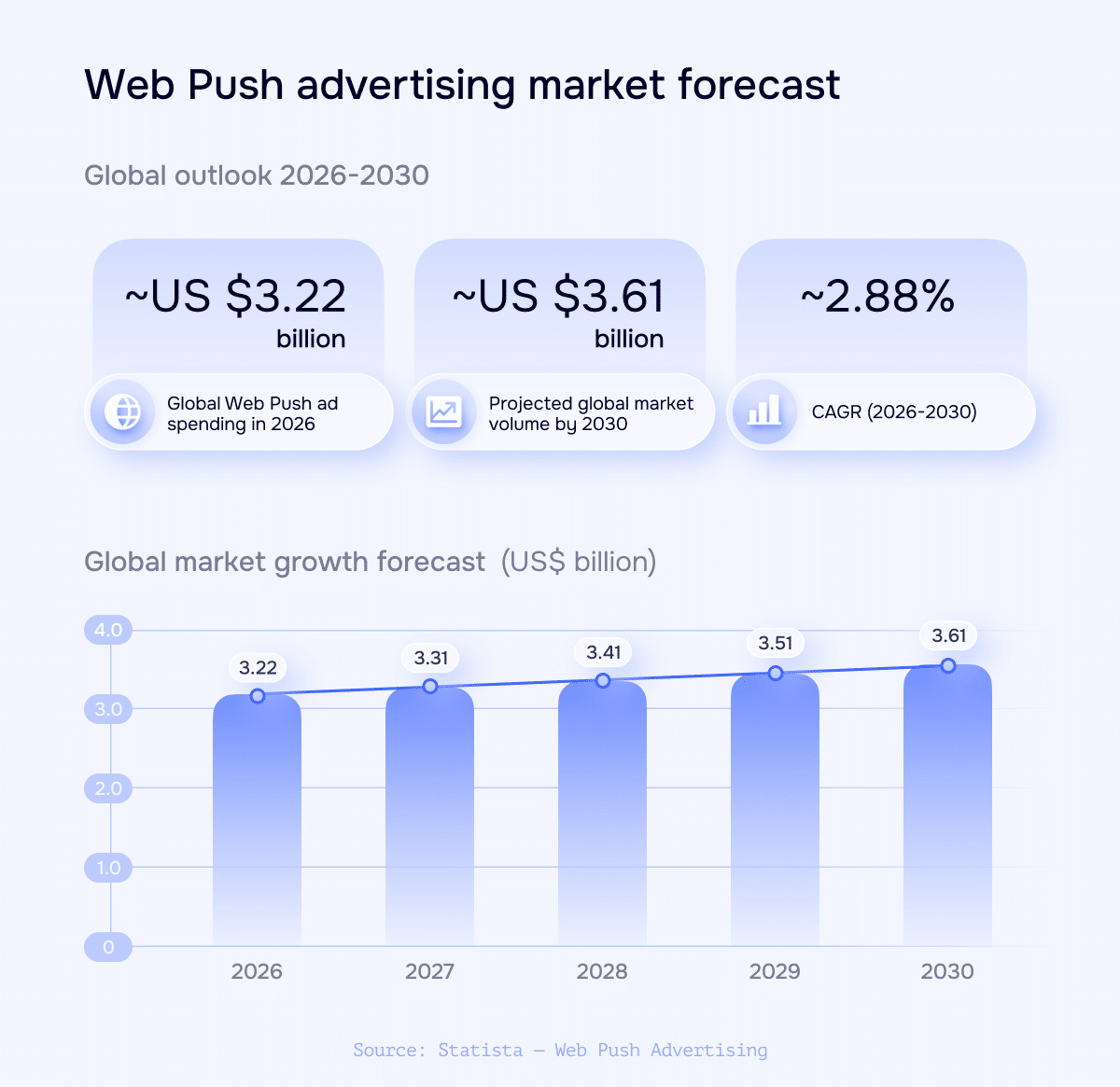
The web push advertising sector, often associated with lower-quality traffic, is evolving in 2026. Industry players are focusing on stricter compliance and improved traffic quality to drive market growth and broader advertiser adoption.

Ad Tech
AI Data Infrastructure: Start Small, Deliver Value Quickly
Building a comprehensive data foundation for AI is a common aspiration, but the most effective path often involves solving one specific problem at a time to generate immediate returns.