Ad Tech|Index 02
Web Push Ads Seek Legitimacy Amidst Maturing Market
The web push advertising sector, often associated with lower-quality traffic, is evolving in 2026. Industry players are focusing on stricter compliance and improved traffic quality to drive market growth and broader advertiser adoption.
- Via
- ADVERTISE TOKYO Editors
- Dateline
- Tokyo, July 16, 2026
- Date
- July 16, 2026
- Time
- 5 min read
Source
MarTech.org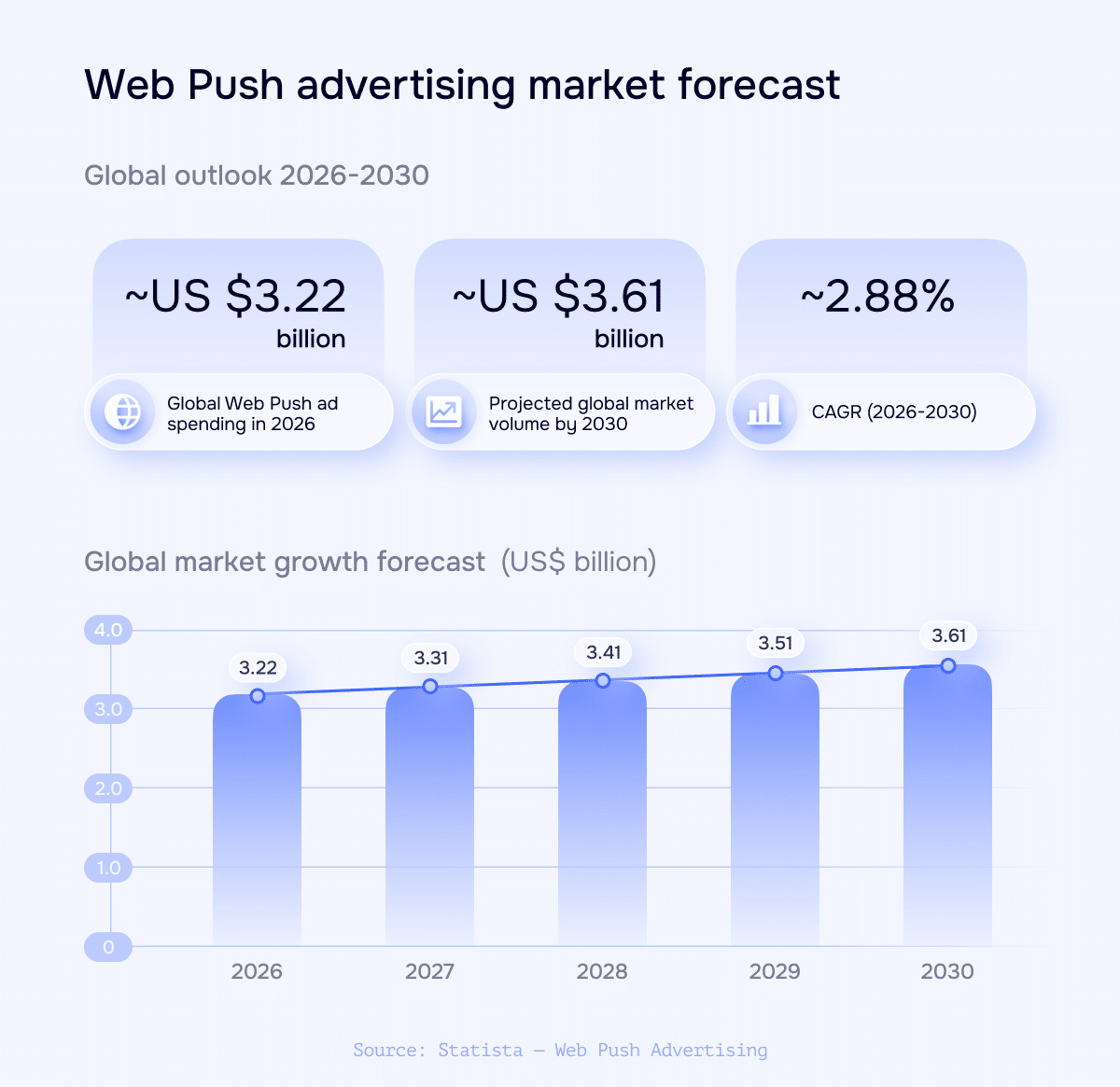
Tagline
Web push ads attempt a quality comeback.
Who & For What
For a Tokyo performance marketer evaluating new low-cost acquisition channels, this signals a potential, albeit cautious, re-evaluation of web push as a viable option for direct-response campaigns this quarter.
vs. Japan Play
This contrasts with the prevalent use of LINE Ads Platform and Yahoo! JAPAN Display Ads for direct-response, where compliance and traffic quality are generally higher and more transparently managed by major platforms.
Tokyo Take
While global players like RollerAds push for legitimacy, the Japan market for web push remains niche, largely due to the dominance of LINE and email for direct user communication and a consumer base wary of unsolicited browser notifications.
Web push advertising, primarily championed by specialized ad networks like RollerAds, is shifting focus in 2026 towards enhanced compliance and traffic quality. This move aims to elevate the format beyond its past reputation for aggressive user acquisition tactics and into a more trusted position within the digital media landscape.
The push for quality reflects a maturing market where advertisers increasingly demand better performance and brand safety. As privacy regulations tighten globally, compliance is no longer an optional consideration but a baseline requirement for sustainable growth in direct-to-consumer digital channels.
This shift involves more stringent vetting of publishers, stricter content guidelines for notifications, and improved targeting capabilities to reduce irrelevant impressions. Networks are investing in fraud detection technologies and ensuring explicit user consent for push subscriptions, moving away from practices that could lead to accidental or unwanted sign-ups.
Web Push advertising is adapting in 2026 through better compliance, stronger traffic quality, and more mature market growth.
Historically, web push has been a niche channel, often utilized for performance marketing in verticals like gambling or sweepstakes where user acquisition volume often outweighed quality concerns. The current emphasis on quality suggests a desire to attract mainstream brands and larger media budgets, positioning web push as a legitimate component of a broader digital media mix, akin to direct email or SMS marketing.
The success of this pivot hinges on whether these quality assurances can be consistently delivered and independently verified. Advertisers will scrutinize conversion rates and post-click engagement metrics closely. The challenge remains for web push providers to demonstrate sustained value against more established, transparent channels, proving their capability to deliver clean, engaged audiences at scale.
Related Stories

Ad Tech
Marketers Demand Clearer Media Measurement, Challenging Ambiguity
Brands worldwide are pushing back against vague measurement standards, seeking direct links between ad spend and business outcomes. This shift redefines agency accountability.

Ad Tech
Beyond Ad Spend: Proving Performance Before Scaling
Increasing marketing budgets without validating their incremental impact risks significant waste. Marketers must prioritize testing frameworks over simple spend growth.

Ad Tech
AI Data Infrastructure: Start Small, Deliver Value Quickly
Building a comprehensive data foundation for AI is a common aspiration, but the most effective path often involves solving one specific problem at a time to generate immediate returns.