Ad Tech|Index 05
Recency-Based CRM Segmentation for Holiday Repeat Purchases
MarTech.org outlines a fundamental CRM strategy: segmenting customers by purchase recency to drive repeat purchases during holiday seasons, coordinating outreach across email and paid media channels for optimal resource allocation.
- Via
- ADVERTISE TOKYO Editors
- Dateline
- October 20, 2026
- Date
- October 20, 2026
- Time
- 4 min read
Source
MarTech.org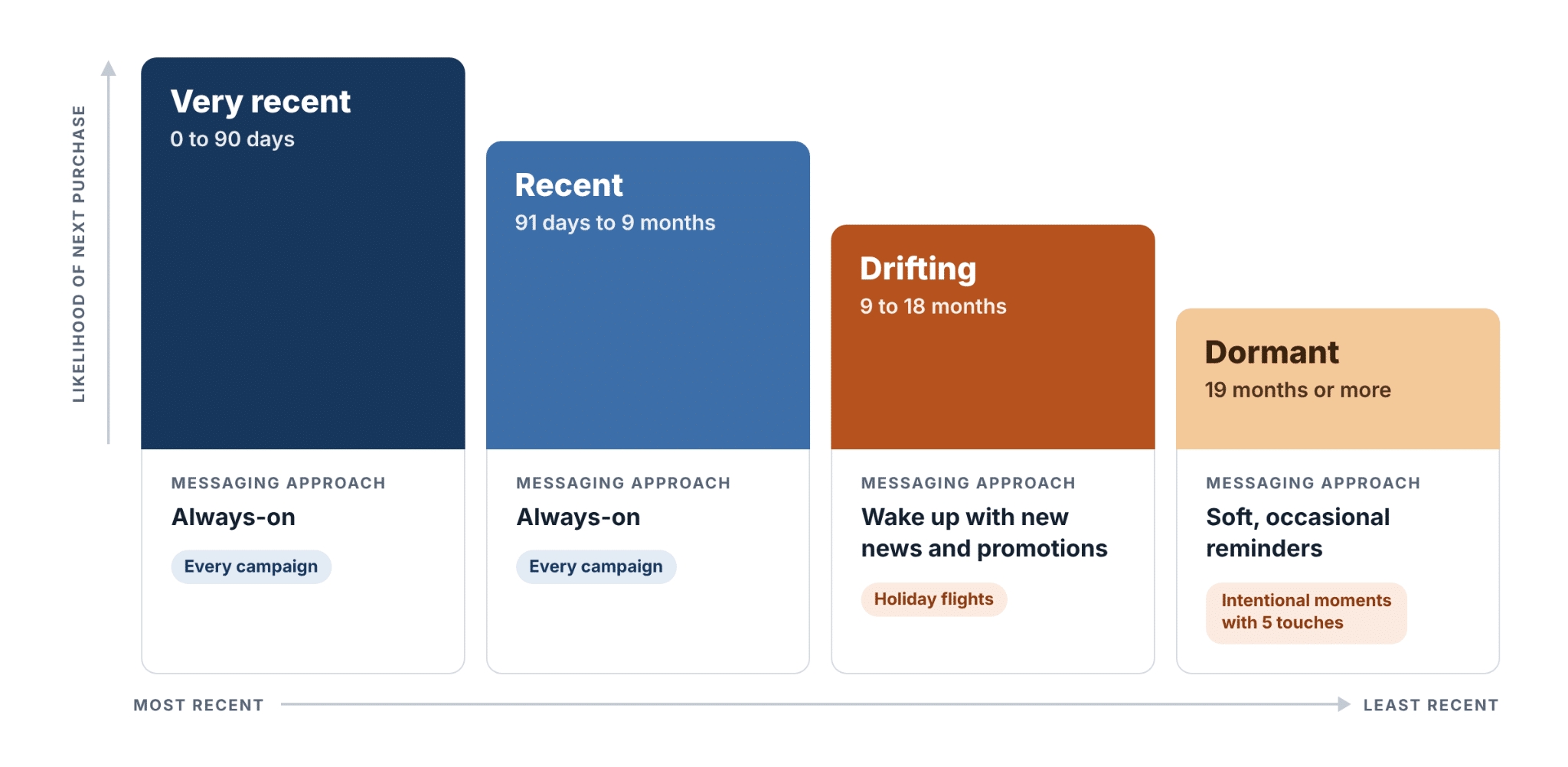
Tagline
CRM recency ladders for holiday repeat purchases.
Who & For What
For e-commerce brand managers or performance marketers in Tokyo planning Q4/Q1 campaigns, this outlines a classic CRM segmentation strategy to drive repeat purchases and justify retention spend.
vs. Japan Play
While basic CRM segmentation is standard, the emphasis on a specific "recency ladder" and tight coordination across email and paid media offers a structured approach that many domestic operations, often siloed, could refine.
Tokyo Take
This approach is directly applicable in Japan, though email is often supplemented or replaced by LINE Official Accounts for direct customer communication. Effective integration of LINE custom audiences with Meta/Google/Yahoo! JAPAN ad platforms remains the operational challenge for Tokyo marketers.
MarTech.org recently detailed a CRM strategy focused on leveraging customer purchase recency to optimize repeat purchases during holiday shopping periods. The approach emphasizes segmenting existing customers based on how recently they made a purchase, then coordinating targeted campaigns across email and paid media channels. This framework is designed for e-commerce and retail brands preparing for high-volume sales seasons.
The core premise is that not all existing customers are equally valuable or responsive. By categorizing customers into a "recency ladder"—such as recent, active, lapsed, or dormant—marketers can allocate resources more effectively. This allows for tailored messaging and offers that align with a customer's current engagement level, aiming to increase their lifetime value rather than solely focusing on new customer acquisition, which is often more expensive.
The strategy involves defining clear segments. For instance, "recent purchasers" (bought within 30-60 days) might receive incentives for immediate repeat purchases or complementary products. "Lapsed customers" (bought 90-180 days ago) could be targeted with re-engagement offers or new product launches designed to rekindle interest. The crucial step is the coordinated execution: email remains a primary channel for CRM, but these segments are also pushed to paid media platforms (e.g., Meta, Google, programmatic DSPs) as custom audiences for retargeting campaigns.
By categorizing customers into a 'recency ladder'—such as recent, active, lapsed, or dormant—marketers can allocate resources more effectively.
While not a novel concept, this disciplined approach to recency-based segmentation often gets overlooked in the rush for broad holiday promotions. Many brands still rely on blanket discounts or generic email blasts, missing the opportunity to personalize at scale. The article underscores the importance of a robust customer data platform (CDP) or CRM system capable of dynamic segmentation and seamless integration with advertising platforms to enable this multi-channel coordination.
The effectiveness of such strategies hinges on accurate data, precise segment definition, and continuous testing of messaging and offers. Marketers should monitor not just conversion rates but also the incremental lift in repeat purchases driven by each segment-specific campaign. The ongoing shift towards privacy-centric advertising further elevates the importance of first-party CRM data as a reliable foundation for targeted outreach.
Related Stories

Ad Tech
Omnicom's Data Integration Nears Completion, Showing Early Returns
The agency holding company's push to unify internal data and media platforms is yielding measurable improvements in campaign performance and efficiency, setting a precedent for global operations.

Ad Tech
Integrated Adtech Platforms Consolidate Media Buying and Intelligence
As digital advertising fragments across channels and data silos, platforms are consolidating supply, demand, and data intelligence to offer marketers a single operating picture.

Ad Tech
Salesforce acquires Braze, aiming for integrated customer activation
The $5.7 billion deal could bridge data and real-time engagement, but integration complexity remains a core challenge for marketers.